

He established the world's first truly global empire and strengthened the powerful House of Habsburg. This was King Carlos I.
He was King of Spain, King of Germany, Holy Roman Emperor (Charles V)... holding over seventy titles, a record in history.
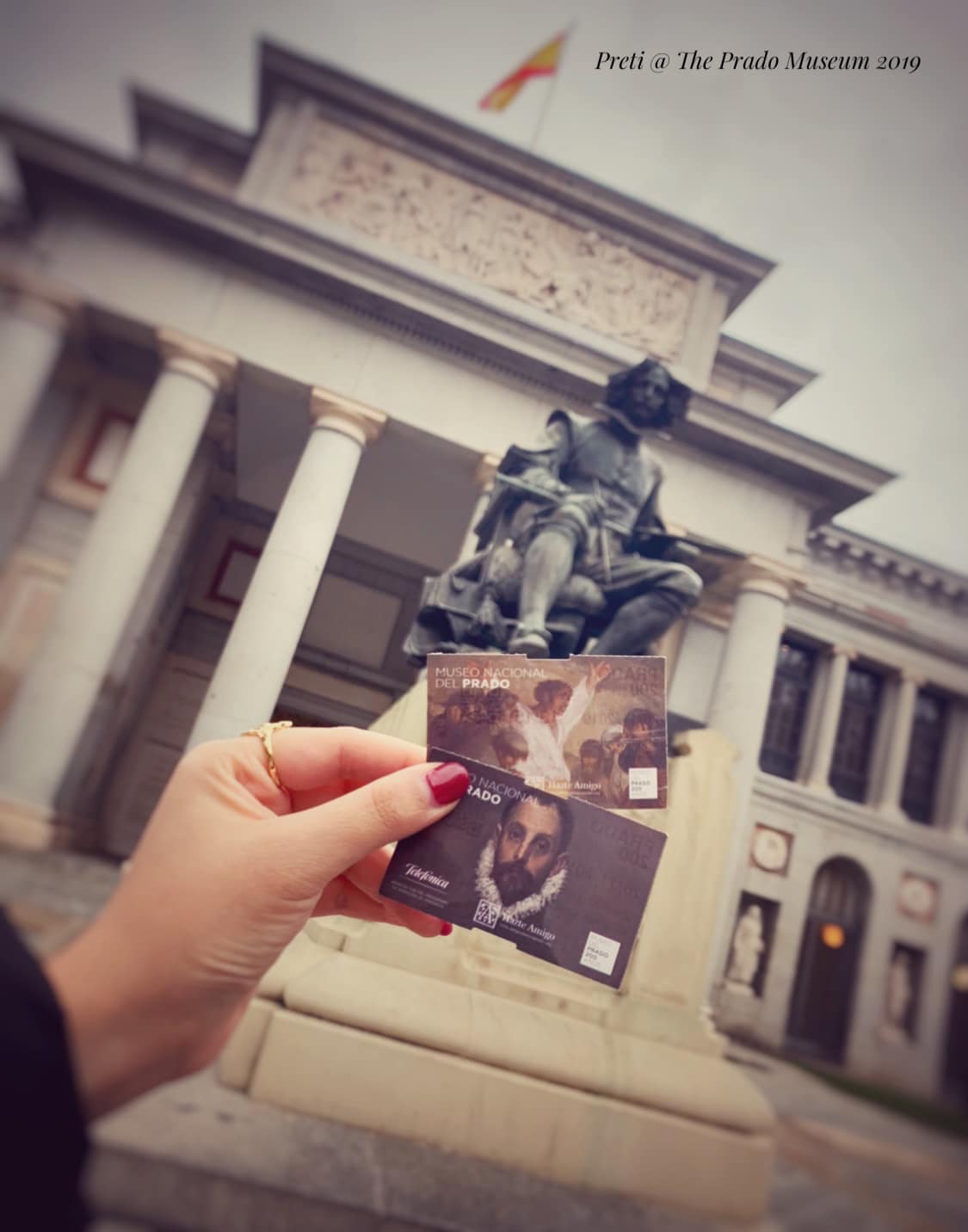
In 2019, we visited the Prado Museum in Madrid. Alongside seeking out Velázquez’s masterpieces of the Spanish royal family, one painting we especially looked for was Titian’s Equestrian Portrait of Charles V — painted in 1548.
Born in 1500, Carlos I was in his forties by then. Whether he could still ride into battle at that age remains a mystery. But Titian certainly captured his image of bravery, command, and wisdom.
During his 39-year reign, he led 40 military campaigns, winning most, though at the cost of lasting ailments.
The Venetian painter Titian was undoubtedly a favorite of Carlos I — the king even granted him a noble title. The portraits Titian painted of the king’s wife Isabella, his son Philip II, and the king himself were all treasured.
It is said that Carlos I once picked up a brush Titian had dropped — a small gesture showing his high regard for the artist.
Titian’s bold brushwork, rich colors, and luminous style had impressed the king since their first encounter in Italy.
The story begins with this very painting. It was created to celebrate Carlos I’s victory at the Battle of Mühlberg in 1547. Though the portrait shows an aged king, his expression remains sharp and determined.
From inheriting the Spanish throne at 16, through struggles for titles, a life of constant warfare, and expanding his empire — his world was undoubtedly filled with achievement.
In love, he was more fortunate. He shared many happy years with Isabella of Portugal. Their son Philip II later smoothly inherited the vast realm he had built...
Yet his life was not without pain — he never truly experienced a mother’s love. His mother was Juana I of Castile, known as “Joanna the Mad.” She was also the elder sister of Catherine of Aragon, Henry VIII’s first wife...
In 1556, Carlos I abdicated and passed the throne to Philip II. The question remained: Could the new king match his father and keep the empire dominant in Europe?
Preti's original article
Photo by Preti