

In Rembrandt’s world, we find a quiet meditation on life.
A painting holds warmth—even across centuries.
For Preti, Rembrandt remains a favorite among Dutch masters.
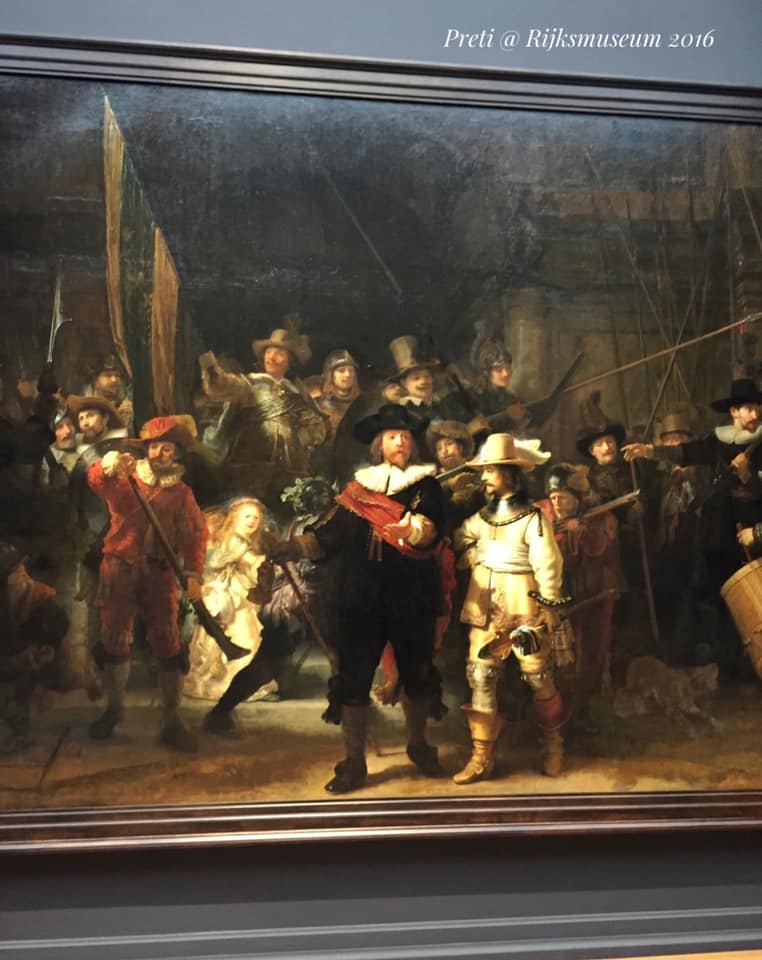
His famous Night Watch, however, changed the course of the painter’s own story…
January 2016, Rijksmuseum. We arrived early, and stood before the painting for a long time.
It’s hard to imagine this work was once slashed, trimmed, and ultimately reshaped Rembrandt’s life.
The Night Watch shows a militia company preparing to march. Rembrandt used light and shadow masterfully, creating a sense of drama. Though it looks like night, he actually painted a daytime scene—the varnish has simply darkened over time.
Group portraits were popular then; each subject paid to be included. But here, not every face is clear.
Rembrandt broke from tradition, arranging the figures dynamically, as if on a stage. Some say he even hid a secret in the painting.
Yet several patrons were unhappy with their unclear portraits, and their complaints harmed his reputation.
It seems every era meets innovation with doubt.
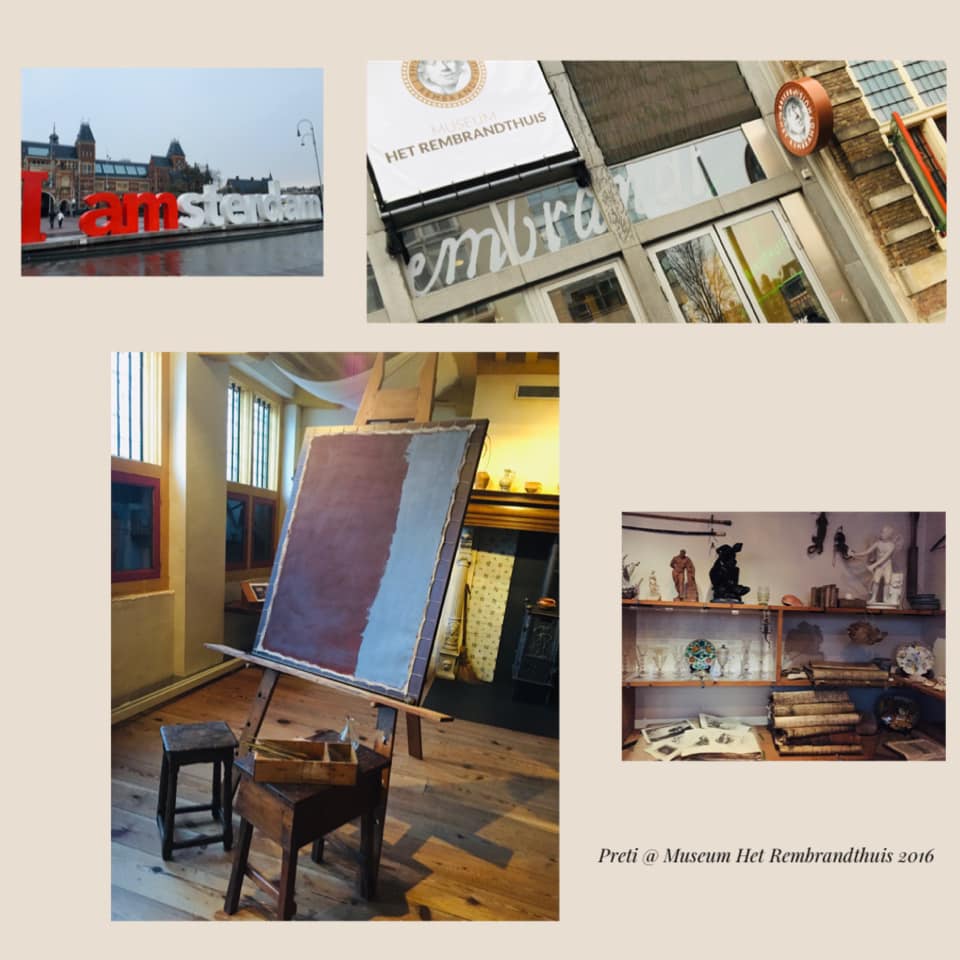
Later, we visited Rembrandt’s house in Amsterdam—a beautiful home he bought at his peak, but lost when he went bankrupt. Today it’s a museum, filled with 17th-century furnishings and some of his etchings.
Walking through, we felt a quiet sadness. After The Night Watch, his life grew difficult: loss, poverty, and finally a lonely death at 63.
Rembrandt’s self-portraits, though, tell a story of resilience—each subtle play of light a quiet defiance.
Through his art, we still feel the warmth of his journey, and pause to reflect on life ourselves.
Preti's original article
Photo by Preti